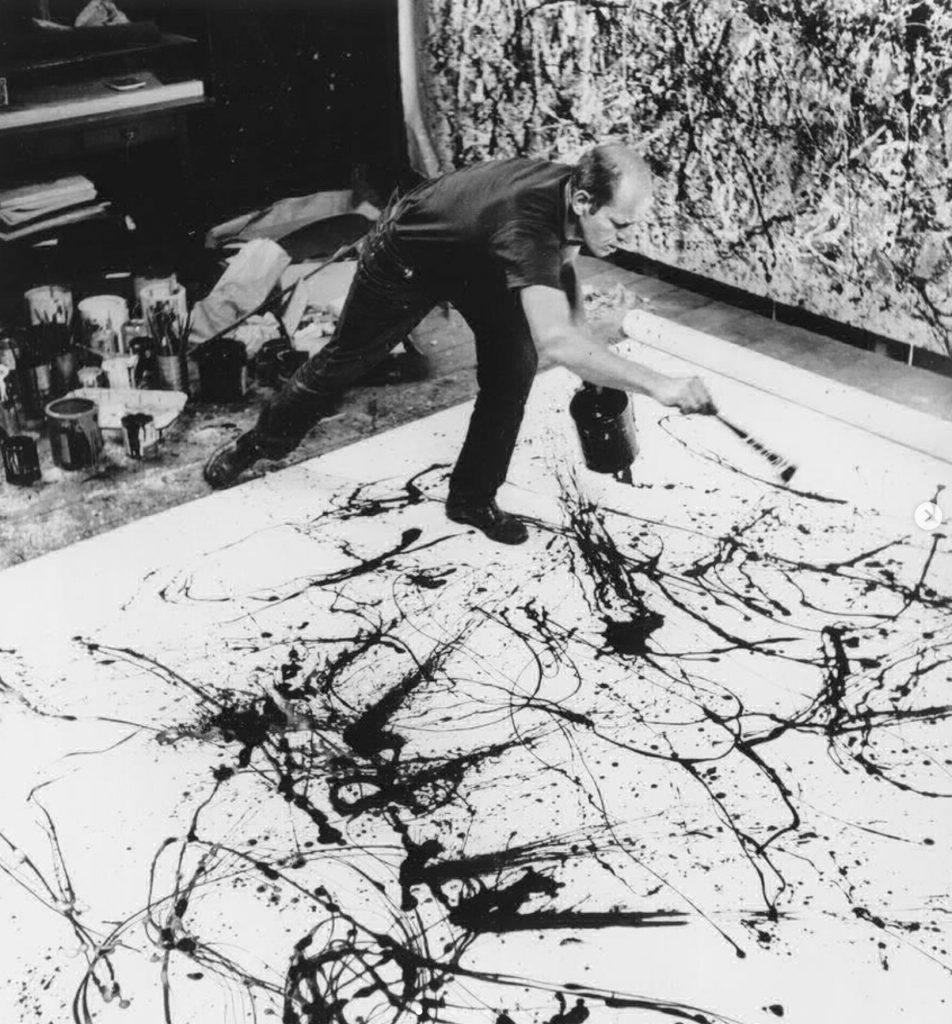
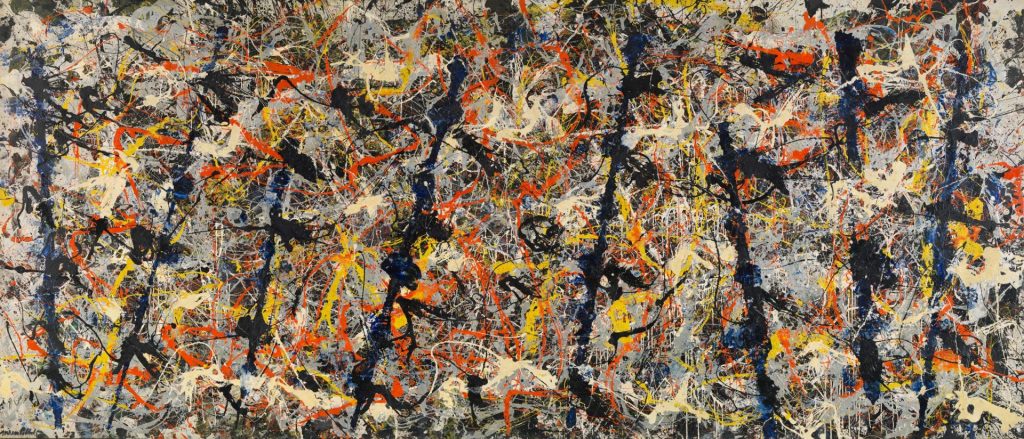
Jackson Pollock was one of the most famous abstract expressionists of the 20th century. His dynamic painting style emphasized the physical act of creation, allowing subconscious impulses to emerge through motion and form. While analyzing some of Pollock’s work this week, I was drawn to a connection between Pollock and Carl Jung.
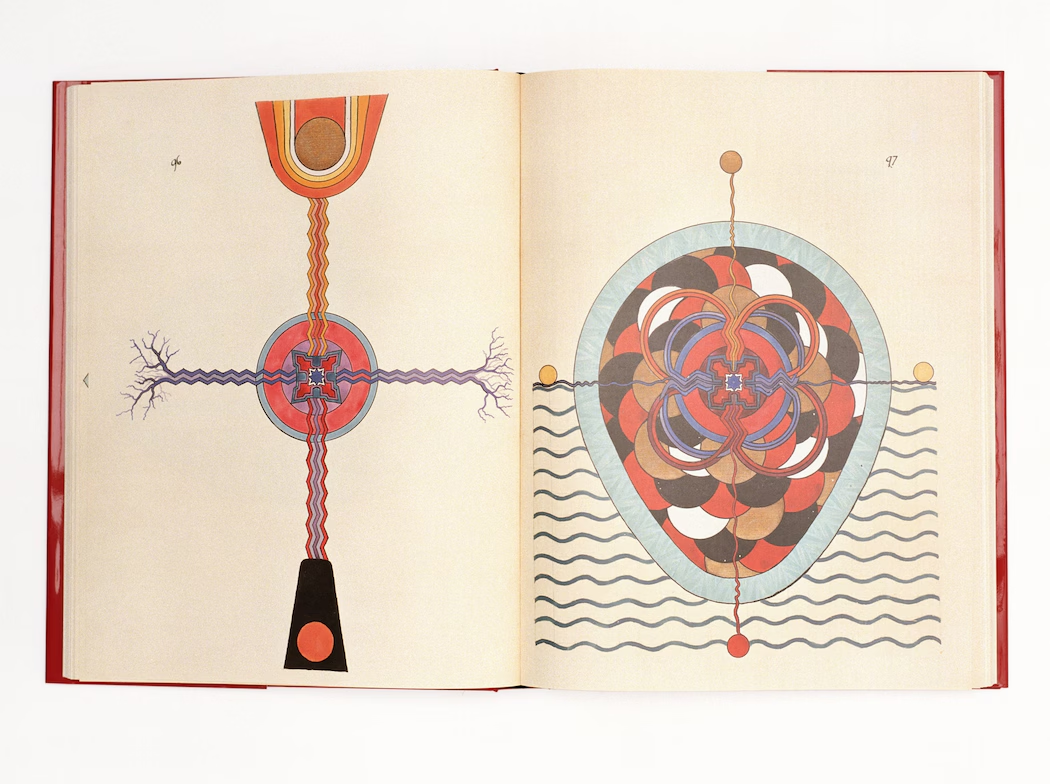
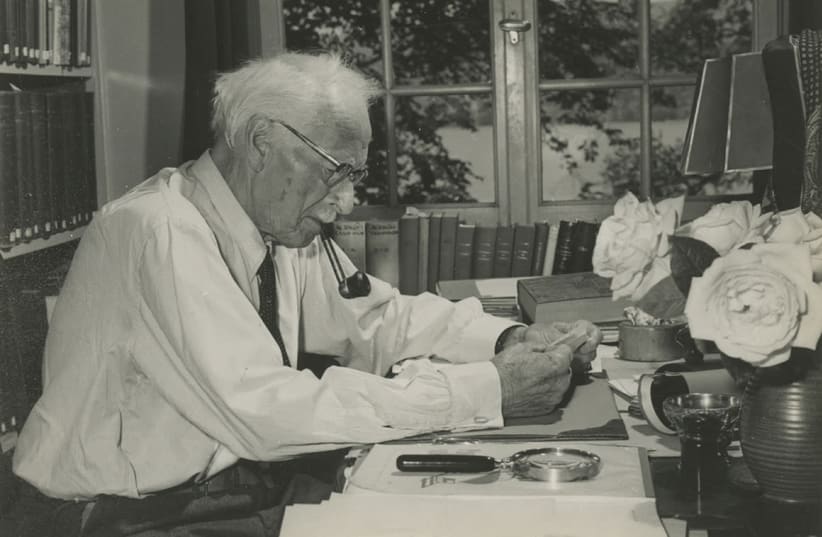
Many of us know about Jung, the famous psychoanalyst, but did you know that Jung was also a prolific artist? During a period of personal turmoil, Jung began creating mandalas—as Jung defined them, circular designs symbolizing the psyche’s wholeness—as a means of self-expression and exploration. Jung observed that these patterns often emerged spontaneously in his own artwork and in the drawings of his patients, reflecting their inner psychological states. He documented this journey in The Red Book, illustrating his daily mandala creations.
Both Pollock and Jung used artistic expression to tap into the depths of their unconscious minds. Pollock’s technique sought to reconnect with his subconscious and raw, primal instincts, focusing entirely on form over function. While less focused on physicality, Jung’s mandalas provided him with similar insights into his psychological state at the time of creation, opening a conversation between his conscious and unconscious minds. Pollock and Jung’s artistic expressions demonstrate that when we relinquish control, profound truths can emerge from the depths of the psyche.
 Em Scott Therapy